


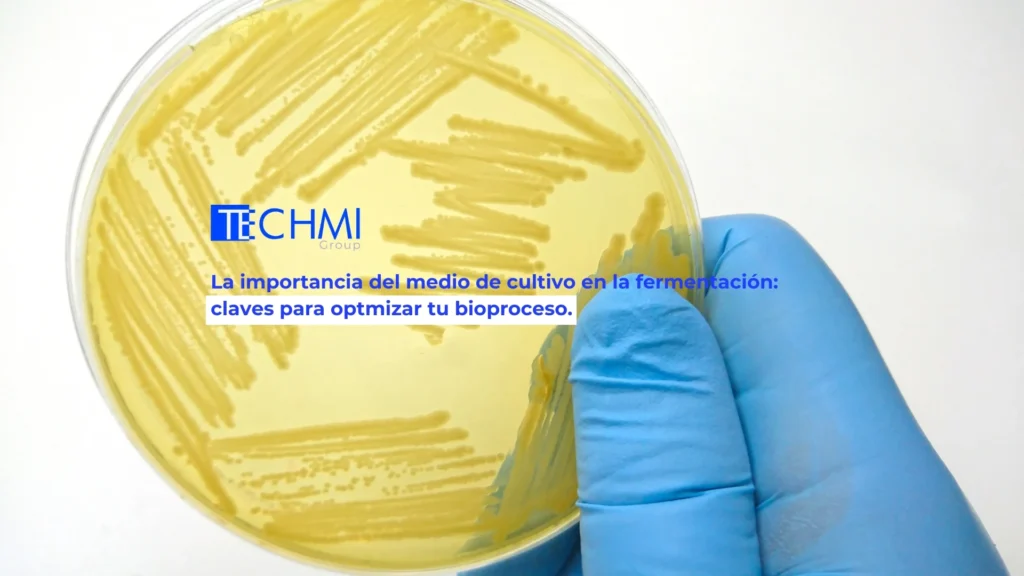


In any fermentation process, success does not depend solely on the bioreactor or the strain used. There is a third element, often underestimated, that makes the difference between an efficient bioprocess and a limited one: the culture medium.
The culture medium is the nutritional environment that allows microorganisms to grow, develop, and generate the desired product during fermentation. Understanding its composition and selection is essential for improving performance, reducing costs, and ensuring process reproducibility.
Why is the culture medium so important?
In order for a microorganism to grow and express its maximum metabolic potential, it needs a balanced set of nutrients. The strain, fermentation conditions (pH, temperature, oxygen, agitation), and culture medium form an inseparable triad that determines the efficiency of the bioprocess.
A nutritionally appropriate medium is one that is capable of meeting the energy and structural needs of the microorganism, promoting growth and production of the target metabolite or protein.
Essential components of a culture medium:
1. Macronutrients (g/L)
They are the basis of microbial growth and must be present in adequate amounts:
- Sources of carbohydrates: glucose, fructose, sucrose, starch… essential as a source of energy.
- Sources of nitrogen: ammonium salts, peptones, or protein extracts, essential for proteins and nucleic acids.
- Phosphorus, sulfur, magnesium, and potassium, essential for structural and enzymatic functions.
2. Micronutrients (µg–mg/L)
They include minerals such as:
- Iron
- Manganese
- Molybdenum
- Calcium
Although required in small amounts, they are crucial for many metabolic pathways.
3. Growth factors
Vitamins, amino acids, and fatty acids that stimulate growth or enable the complete development of the microorganism.
TYPES of culture media and how to choose the right one
Culture media can be classified as natural or designed (synthetic):
➡️ Designed commercial media
They are specific to certain microbial groups and offer standardized and reproducible compositions. They are ideal when stability and control are required.
➡️ Custom-designed media
Starting with individual raw materials, it is possible to formulate a customized medium, which allows for:
- Adjust the nutritional composition to the strain or process
- Reduce costs
- Increase productivity
- Control the quality of ingredients
➡️ Natural resources and agri-food by-products
Increasingly used thanks to the trend towards the circular economy. Many by-products have a very attractive nutritional profile, enabling sustainable and low-cost fermentation.
A current example is solid fermentation of organic waste, a practice that promotes the reuse of materials and reduces environmental impact.
Sterilization and microbiological control of the environment
Regardless of the medium selected, it is essential to ensure that it is free of microbial contaminants. Otherwise, the target microorganism would compete with other unwanted organisms, affecting performance and reproducibility.
Common sterilization methods:
- Sterilization in place (SIP) in industrial bioreactors
- Sterilization ex situ for small volumes
- Pasteurization
- Use of chemical agents, depending on the process and type of medium
Required medium volume: batch, fed-batch, or continuous?
When planning a bioprocess, it is important to correctly calculate the volume of culture medium. This depends directly on the type of fermentation:
🔹 Batch
The entire medium is loaded at the start of the process.
🔹 Fed-batch
The medium is added in a controlled manner during fermentation, improving yield and prolonging the production phase.
🔹 Continuous
Culture medium is constantly added while product is removed. Precise calculations are required to maintain the balance of the system.
Each modality involves different requirements in terms of quantity, concentration, and nutritional strategy.
Conclusion: The culture medium is the heart of the bioprocess.
Selecting and correctly formulating the culture medium allows:
- Increase productivity
- Reduce costs
- Improve reproducibility
- Accelerate fermentation
- Promote more sustainable and efficient processes
At Techmi Group, we know that an optimal bioprocess begins long before the bioreactor is turned on. That is why we develop technological solutions that allow for precise control of all parameters that influence crop performance.
If you are looking to improve your fermentation processes or select the ideal bioreactor for your laboratory or pilot plant, we will be happy to help you.
More information at: www.techmigroup.com