


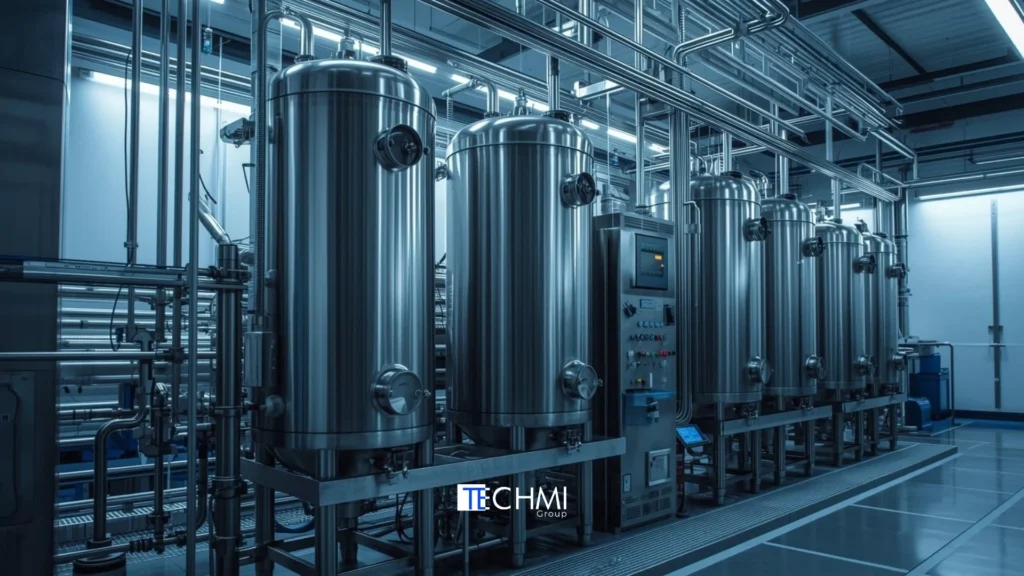


Bioreactors have become a cornerstone of modern biotechnology and biochemical engineering. These systems, designed to maintain biologically active environments under strictly controlled conditions, enable processes such as fermentation or cell culture to be carried out with a high degree of efficiency. Their ability to regulate critical variables such as temperature, pH, dissolved oxygen (DO) and nutrient concentration makes them essential tools across a wide range of industries.
In practical terms, a bioreactor promotes the growth of microorganisms, cells or enzymes that produce high-value compounds, including antibiotics, proteins, biofuels and fermented foods. It is this precise control that makes it possible to optimise productivity and ensure the quality of the process.
Industrial bioreactors can be classified according to the medium in which they operate, allowing them to be adapted for use in a variety of applications.
On the one hand, liquid-phase or submerged culture bioreactors are the most widely used in industry. They provide a homogeneous medium that facilitates oxygen transfer, nutrient distribution and precise control of critical variables. This category includes STRs, air-lift systems and bubbling columns, which are widely used in the production of vaccines, medicines, enzymes and biofuels.
On the other hand, solid-state bioreactors, or solid-state fermentation (SSF) systems, operate using moist substrates with no significant presence of free water. This type of system replicates natural conditions for microbial growth, particularly in fungi. Among the most common types are tray reactors, fixed-bed reactors and rotary reactors. They are commonly used in the production of enzymes, organic acids, fermented foods and products for sustainable agriculture.
The leadership of the stirred tank reactor (STR)
Among the various technologies available, the stirred tank reactor (STR) stands out as one of the most widely used systems worldwide. Its robust and versatile design ensures uniform mixing, efficient oxygen transfer (kLa) and rigorous control of all process variables.
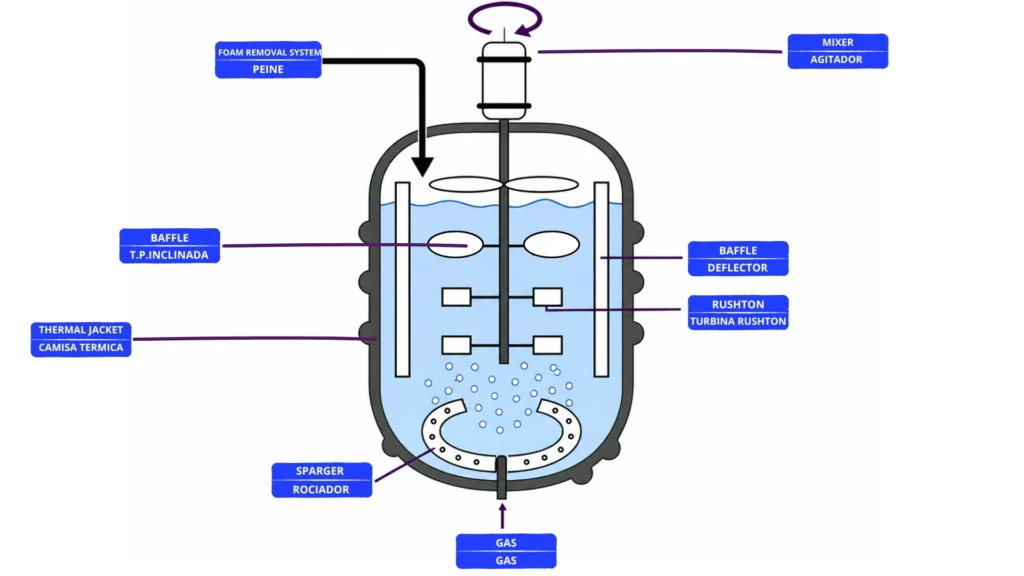
The STR consists of a stainless steel tank, which ensures sterile conditions and durability. Inside, a mechanical agitation system ensures the even distribution of nutrients and microorganisms, whilst improving oxygen transfer, a key factor in aerobic processes. Aeration is achieved using devices such as spargers, whilst temperature control is carried out using jacket systems or coils.
In addition, these systems are equipped with real-time sensors that enable the monitoring of critical parameters such as pH, dissolved oxygen (DO), temperature and foam formation. In this context, the integration of state-of-the-art sensors, combined with big data analytics techniques, has become one of the main drivers of growth in the bioreactor market. These include sensors capable of monitoring parameters such as cell density (total and viable), dissolved CO₂ and glucose in real time. They also feature feeding systems that allow operation in different modes: batch, fed-batch or continuous, thereby adapting to the requirements of each production process.
Additional components such as baffles, mechanical seals and foam control systems help to improve process stability, safety and efficiency, establishing the STR bioreactor as a highly reliable solution for the industry.
Strategic applications in Spanish industry
In Spain, stirred-tank bioreactors play a key role in strategic sectors. In the pharmaceutical and biopharmaceutical industries, they are essential for the production of vaccines and biologics.Furthermore, in the field of industrial biotechnology, they are used to produce recombinant enzymes and proteins, which are essential in numerous processes.
The agri-food sector also benefits greatly from this technology. Bioreactors enable the development of controlled and precision fermentation processes for the production of food, alternative proteins, beverages, biofertilisers and biocontrol agents, helping to improve production efficiency and sustainability.
Furthermore, their impact extends to the environmental sector, where they are used in water treatment and bioremediation processes, as well as in the production of biofuels and in the chemical industry for the development of more sustainable bioplastics and composites.
Key points for optimising performance
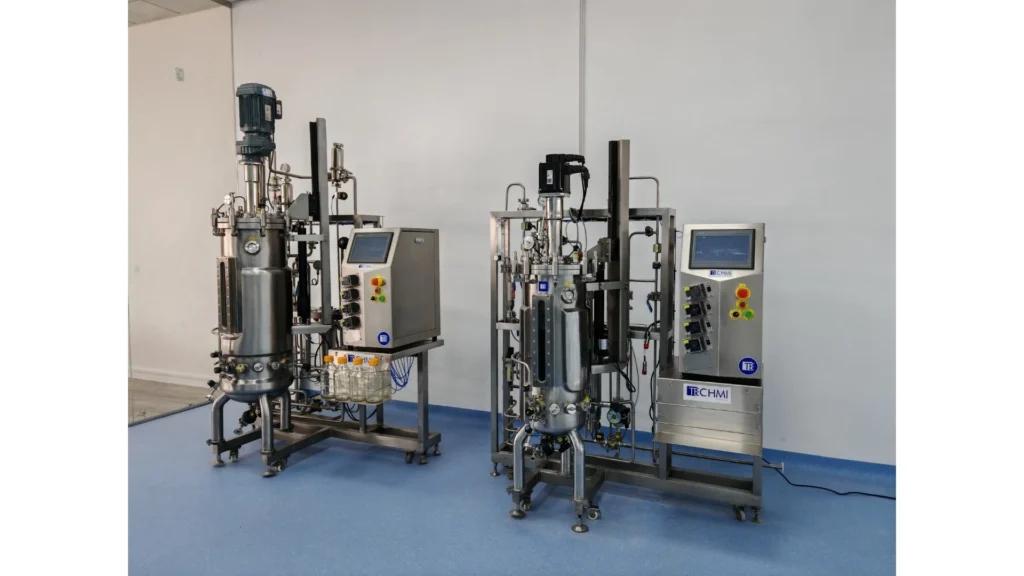
Maximising the performance of an STR bioreactor requires a delicate balance between various operational factors. Proper oxygenation, Proper mixing and rigorous control of variables are key to ensuring the efficiency of the biotechnological process.
In particular, feeding strategies, especially in fed-batch processes, play a decisive role in industrial productivity. Added to this are other critical factors such as the quality of the inoculum, foam control and the maintenance of sterility, all of which are essential for ensuring stable and reproducible processes.
A key technology for a sustainable future
The wide range of bioreactor technologies means they can be used across a variety of sectors, adapting to the specific requirements of each process.Whilst liquid-phase systems dominate high-precision and industrial-scale environments, solid-phase bioreactors stand out for their energy efficiency and their closer alignment with natural biological processes.
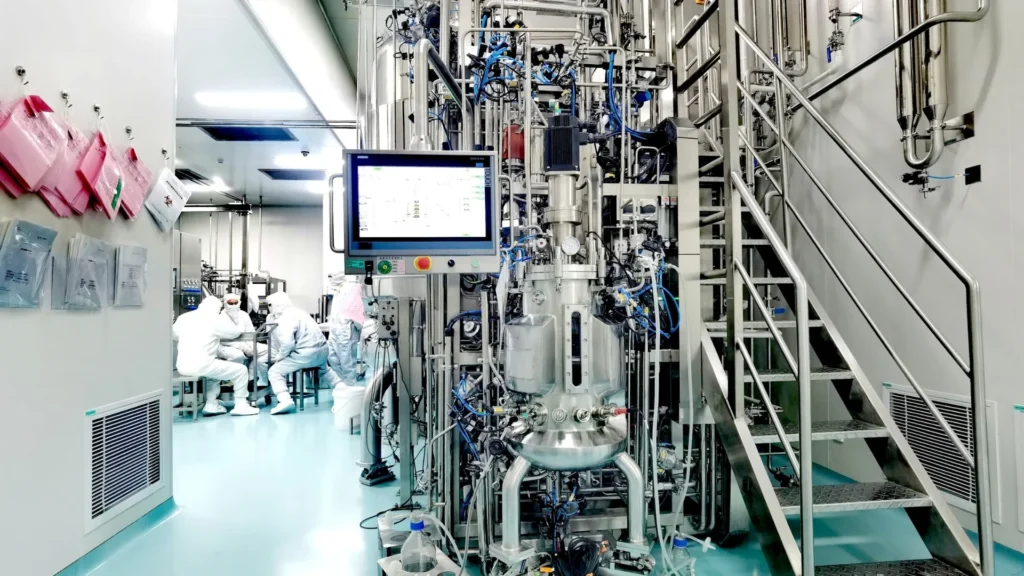
Overall, stirred tank reactors (STR) are establishing themselves as strategic tools for driving industrial innovation, improving sustainability and bolstering growth in Spain’s biotechnology sector. Their role will become increasingly important in the transition towards more efficient and responsible production models that are in line with today’s environmental challenges.