



Techmi Bio Lab multi-vessel fermentation station
Techmi Bio Lab multi-vessel fermentation station
What is a Techmi Bio Lab multi-vessel fermentation station?
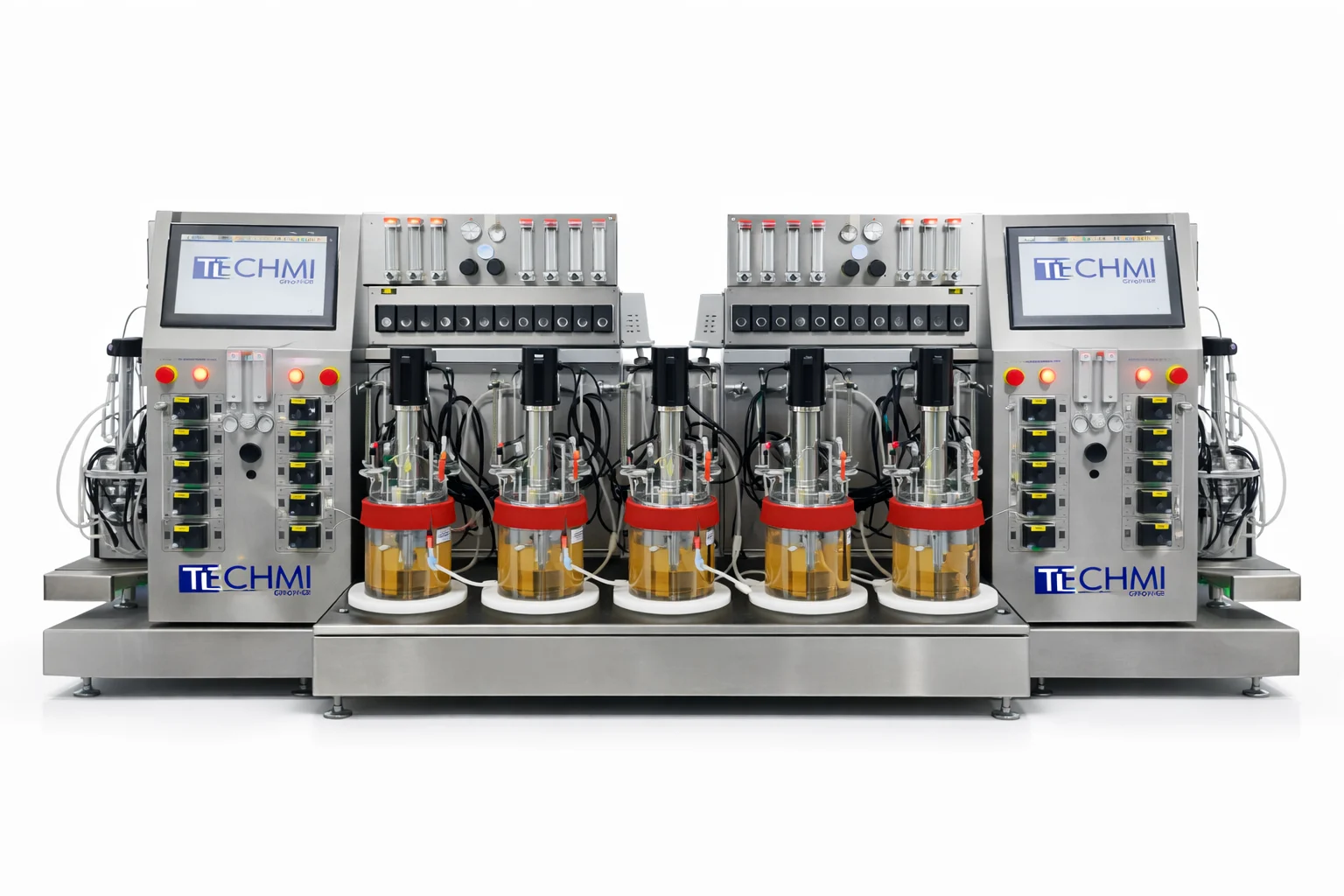
The Techmi BIO Lab multi-vessel fermentation station is a system designed for micro-scale research and development, enabling parallel fermentation trials with high reproducibility and precise process control. This configuration, consisting of several individual bioreactors, facilitates the simultaneous study of different culture conditions, which is particularly useful inscreening, strain optimisation and bioprocess development phases.
Each fermentation vessel has a reduced working volume, ideal for laboratory experimentation, and features independent control of key process parameters such as temperature, pH, aeration, and agitation. The system integrates high-precision sensors and a compact, hygienic architecture, allowing stable and reproducible conditions to be maintained in each reactor. Thanks to this design, the Techmi BIO Lab station is a key tool for accelerating the development of biotechnological processes and facilitating their subsequent scaling up.
Multi-vessel fermentation station.
-Configuration of several bioreactors, each with a different working volume.
-Independent and precise control of the critical parameters of each reactor: temperature, pH, aeration, dissolved oxygen, and agitation.
-Two pumps per bioreactor for dosing and process control.
-Agitation range from 0 to 1000 rpm with an accuracy of ±1 rpm.
-Colour touch screen for system monitoring and control.
-Automation of operating variables with the possibility of storing and managing process recipes.
Main applications of the multi-vessel fermentation station:
-Screening of microbial strains to select microorganisms with higher productivity.
-Optimisation of culture media and nutrient formulations to improve process performance.
-Studies of fermentation parameters, such as pH, temperature, aeration, or stirring speed.
-Development and validation of bioprocesses prior to scaling up to pilot or industrial bioreactors.
-Academic research and R&D projects at universities and technology centres.
-Production and study of microbial metabolites, such as enzymes, biopolymers, or bioactive compounds.
-Research in industrial microbiology and biotechnology.
-Parallel fermentation trials to compare operating conditions quickly and reproducibly.
Products
Related Products
In this category, you will find more products.